Financial services
Payments, ledgers, risk tooling and internal platforms for banks, brokers and fintechs.
Lake Metier is an international engineering studio. We design, build and operate custom software, cloud platforms, data systems and secure digital infrastructure for organisations that treat technology as a serious part of their business — not as a temporary experiment.

Custom applications, internal platforms and public products built for direct business use.
Architecting, migrating and operating multi-region cloud estates with predictable cost and resilience.
Warehouses, pipelines and analytical products that turn operational data into decisions.
Practical integration of language models, retrieval systems and machine learning into real workflows.
Threat modelling, hardening, identity, and readiness for security frameworks and audits.
Structured rework of legacy systems while preserving the business logic that took years to encode.

We treat infrastructure as a first-class engineering artefact. Every environment is expressed in code, every deployment is reproducible, every observability signal is deliberate. This is what allows a system to be understood, evolved and, when necessary, repaired without ceremony.
A representative selection. A fuller description of each practice is given on the Services page.
Bespoke platforms built for the specific way a business actually operates.
Interfaces engineered for reliability, accessibility and long product life.
Reproducible infrastructure, deployment discipline and operational readiness.
Data pipelines, warehousing and analytical products that support decisions.
Language models, retrieval systems and predictive components embedded in real workflows.
Threat modelling, hardening reviews and preparation for external assessments.
Careful reconstruction of systems whose value cannot be lost in transit.
Support, monitoring and continued evolution after go-live.
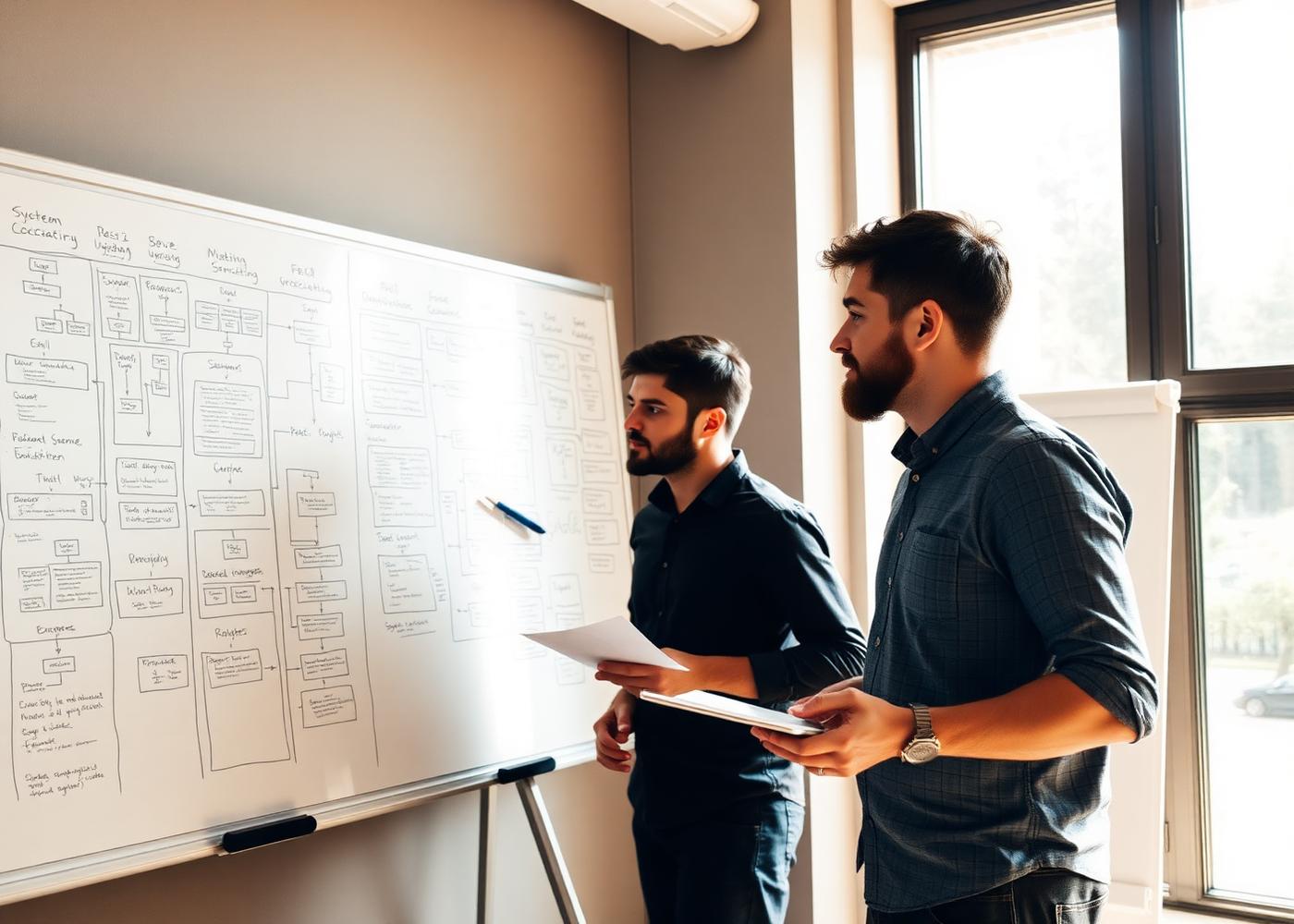
Fig. 02 — Architectural review, on the wall, before it becomes code.
Every project begins with a written technical brief. Architecture is agreed before code is written. Work is decomposed into vertical slices that can be reviewed, deployed and measured independently. Iteration is expected and welcomed, but it takes place inside a structure rather than instead of one.
We do not believe in demonstrations that hide the real state of a system. Progress reporting is factual and continuous, and clients are given direct access to code, environments and metrics from the first sprint onward.
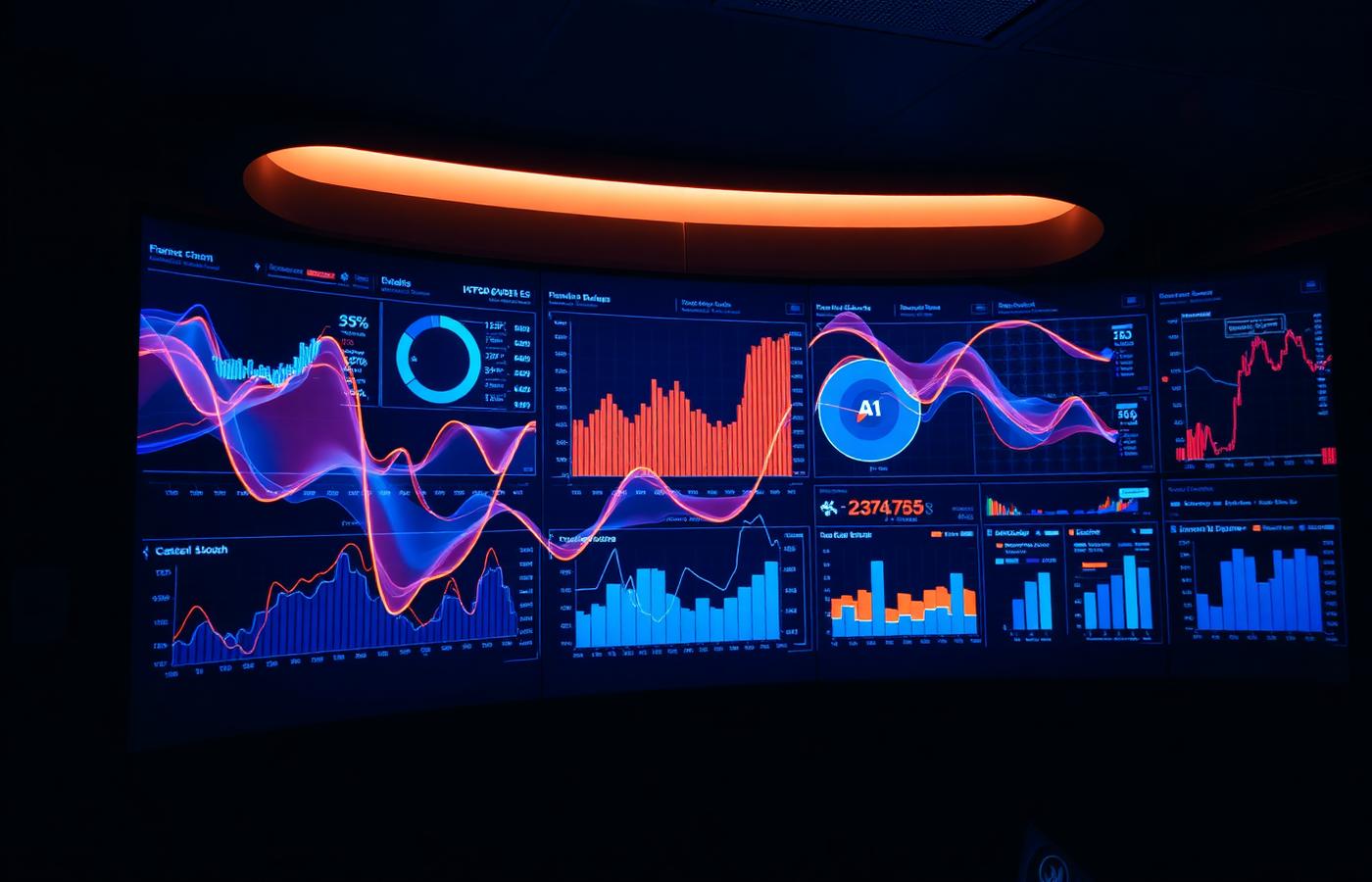
We approach security as an engineering discipline that runs through the full life-cycle of a product. Threat models are drawn before an architecture is finalised. Identity, secrets and access are treated as part of the design, not as controls bolted on afterwards. Where formal frameworks apply — ISO 27001, SOC 2, GDPR, sector-specific regulation — we prepare systems to be examined against them, in writing, with evidence.

Payments, ledgers, risk tooling and internal platforms for banks, brokers and fintechs.
Operational systems for manufacturing, transport, energy and supply chain organisations.
Product-engineering capacity for SaaS and platform companies extending mature product lines.
Clinical workflow tools, research platforms and data systems built to withstand regulation.
Practice-management, matter-management and internal tooling for consulting and legal firms.
Digital services for public agencies and international organisations with careful procurement.
Business context, existing systems, constraints, success criteria.
Written technical response covering approach, risks, decisions.
Vertical slices, continuous integration, weekly demonstrable progress.
Performance, security, observability and operational readiness.
Handover, documentation and, where retained, continued evolution.
The tools change; the criteria do not. We favour widely-supported, well-documented technologies that will still be maintained the day a new team inherits the codebase.

Every non-trivial change begins as a short technical note. If we cannot describe it, we do not build it.
No engineer merges their own code. Review is a conversation about intent, not a rubber stamp.
Unit tests cover behaviour; integration tests cover contracts; end-to-end tests cover the paths users actually take.
Every deployed service exposes traces, metrics and logs that make it possible to answer real questions.
Runbooks, architectural decisions and onboarding materials are treated as first-class outputs.
The people who scope the work are the people who deliver it. There is no separate account team performing the technical role in slides.
Decisions arrive with a paper trail. When engineers change, the reasoning survives.
We build systems we would be comfortable being paged for. That constraint shapes every architectural choice.
Scope, timeline and communication rhythm are set at the beginning and reviewed in writing throughout.
Most of our clients are not first-time engagements. The studio is structured to be worth returning to.
We work across time zones and jurisdictions, in English, with clients that expect professional norms.

Lake Metier is structured deliberately around small, senior teams. We prefer three considered engineers to eight uncoordinated ones. This makes communication cheaper, decisions faster, and the quality of thinking more legible in the resulting product. Where a project genuinely requires more capacity, the studio scales into cross-functional pods that keep the same working rhythm.
Engineers, designers and architects work in the same room — whether that room is physical or distributed. Everyone reads the brief. Everyone sees the ticket. Everyone has an opinion about the shape of the interface. This is a practice, and it is practised together.
Every engagement starts with a written brief and a discovery conversation. We review the business context, existing systems, constraints and success criteria, then produce a short technical response describing scope, delivery approach, risks and a realistic timeline. Only once both sides agree on the shape of the work do we move into planning and execution.
The studio is structured for established mid-market and enterprise clients that already operate real production systems. This includes software companies extending their platforms, financial and industrial groups modernising internal tooling, and technology leaders in growing organisations who require senior engineering capacity without expanding headcount.
Both models are supported. Some clients prefer a self-directed delivery team accountable for a full outcome. Others integrate our engineers directly into their existing squads under their own technical leadership. The choice depends on the level of internal capacity and the nature of the work.
Our practice centres on TypeScript, Python, Go, Java and modern cloud native tooling on AWS, Azure and Google Cloud. On the client side we focus on React, React Native and progressive web applications. We also work extensively with SQL and analytical data platforms, container orchestration, message-driven architectures and event streams.
Quality is treated as a property of the process rather than a phase. Code review, automated testing, continuous integration, static analysis, threat modelling and structured release management are standard. Larger programmes are supported by an independent quality assurance function that operates alongside the delivery team.
Every product we ship is accompanied by documentation, operational runbooks and a defined handover. Clients who wish to retain the studio can move into a maintenance and evolution phase covering support, incident response, dependency upgrades and continued feature development on an agreed cadence.
An international engineering studio. Correspondence is handled by email; new engagements begin with a written brief describing the work and the business context around it.